
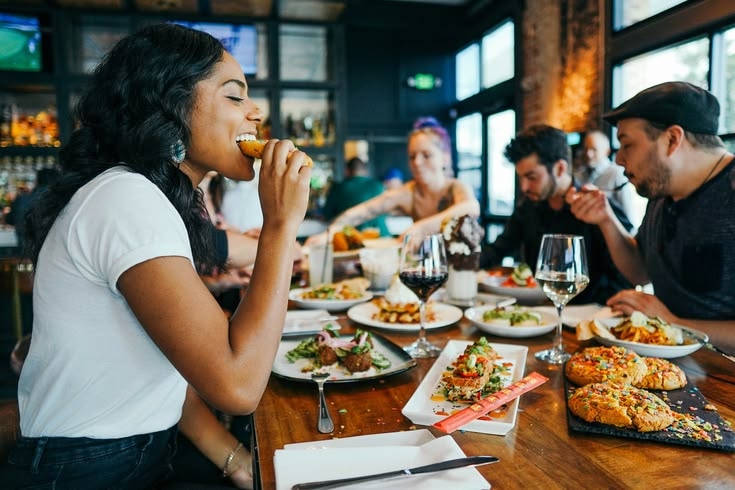
Eating well in Senegal
What people eat here, where the good tables are, how delivery works — and, if you prefer, a team that books for you.
The food
Thirteen things to taste before you leave
Senegalese cooking is shared from one dish, simmered slowly, and runs from rice and fish all the way to tea poured three times. Here is enough to read a menu without hesitating.
Lunch
Ceebu jën (thieboudienne)
Intangible Heritage of Humanity — 2021The national dish: rice cooked in a fish broth with tomato and vegetables — cassava, carrot, cabbage, bitter aubergine. Born in Saint-Louis in the 19th century, it is eaten at midday from one large bowl set in the middle. Inscribed as Intangible Cultural Heritage of Humanity in 2021.
Yassa
Chicken or fish marinated in lemon and mustard, served under a mountain of slow-cooked onions. It comes from Casamance and pleases everyone, children included.
Mafé
Meat simmered in a thick, mild peanut sauce, served over white rice. Filling enough that you plan nothing after it.
Soupou kandia
Pounded okra, palm oil and seafood over rice. Strong, a little slippery, genuinely good: this is what a Dakarois recommends to see whether you are serious.
Thiou
A tomato stew with fish or meat, less famous than ceebu jën but on every neighbourhood menu.
Evening
Dibi
Mutton grilled over wood, served on paper with onions and mustard, in dibiteries that open after dark. You eat with your fingers, standing or on a bench.
Chawarma
A legacy of Dakar's Lebanese community, settled here for a century. You find it on every corner, late at night, and it is often very good.
Street food
Pastels and fataya
Fritters stuffed with fish or meat, fried in front of you and dipped in spicy tomato sauce. The afternoon snack.
Accara
Black-eyed pea fritters served in bread with sauce. Street breakfast, for a few hundred francs.
Lakh
Sweet millet porridge with curdled milk, eaten morning or evening. The ancestor of the Senegalese breakfast, before bread and butter.
To drink
Bissap, bouye, ditakh
The country's juices: tart red hibiscus, creamy baobab fruit, green and fragrant ditakh. Served iced and often very sweet — ask for less sugar if you need to.
Café Touba
Coffee roasted with Selim pepper, which gives it its kick. Drunk standing at a tangana in the morning, for a hundred francs.
Ataya
Green tea served in three successive glasses, from bitter to sweet, poured from high to raise the foam. A ceremony that lasts an hour: if you are offered it, someone has time for you.
At the table
How people eat here
Nothing intimidating, but a few habits are worth knowing before the first meal.
The shared bowl
People often eat together from the same dish, each from the part in front of them, with the right hand or a spoon — one will be handed to you without asking. Your host will push the best pieces your way: that is attention, not a mistake.
Meal times
Lunch is the real meal, around 2 pm, and it is generous. Dinner is late, rarely before 9 pm. In the morning people stop at a tangana for café Touba and bread and butter.
Teranga
If you pass by at mealtime, you will be invited to eat. Declining three times is polite, declining forever is not — accept at least a few mouthfuls.
During Ramadan
Many places close during the day and reopen at sunset for ndogou, the breaking of the fast: dates, coffee, fritters. The whole country's timetable shifts; tell us if your stay falls in that period.
Special diets
Meat is halal almost everywhere; alcohol and pork are only found in certain places, and never in Touba. Vegetarian takes planning: fish goes into nearly every broth, including those not named after it. Say so in advance and we will tell the restaurant.
Water
Drink bottled or filtered water. Good restaurants make their ice with treated water; on the street, hold off until you have acclimatised.
Budget
What a meal costs
Orders of magnitude seen in Dakar, per person for a main course. They give you a sense; they do not commit any establishment.
- Gargote, tangana1,000 to 2,500 CFAThe neighbourhood dish of the day, served in a bowl. This is where everyone eats, and often where it is best.
- Neighbourhood restaurant4,000 to 9,000 CFAA proper table, Senegalese or Lebanese menu, served at lunch and in the evening.
- Seafront table15,000 to 25,000 CFAWhole fish, lobster, a view of the ocean in Almadies, Ngor or Saly.
Where to eat
The neighbourhoods, and what you find there
Rather than a list of addresses that will be out of date in six months, here is the character of each area. Tell us where you are staying and we will look for the table of the moment — the one that is open and good that week.


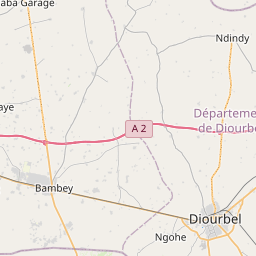


Approximate positions, at the centre of each area.
Delivery
Ordering to your accommodation
Three ways to have dinner without going out, in order of reliability in Dakar.
Delivery apps
They mainly cover Dakar and its near suburbs, and coverage varies from one area to the next: check your address in the app before relying on it. Payment is usually by Wave, Orange Money or cash on delivery.
- Tiak-TiakMeals, groceries and parcels in several cities, with rider tracking.tiak-tiak.sn
- SenEatSenegalese dishes and Dakar restaurants, payment by Wave or Orange Money.seneat.com
- Dakar Food DeliveryA Dakar app: browse restaurant menus and have food delivered where you are.dakarfooddelivery.com
- LivreurBIDakar, Thiès and Saint-Louis, with cash on delivery available.livreurbi.com
- TogalmaOffice lunches delivered on weekdays, to be ordered the same morning.togalma.com
Delivery services appear and disappear quickly in Senegal: this list was checked in October 2026. Jumia Food, still recommended in places online, left the country at the end of 2022.
WhatsApp, straight to the restaurant
This is the most common method in the country, and often the fastest: the number is on the restaurant's Facebook or Instagram page, you send your order and address, and a rider sets off. Have small cash ready if you are not paying by Wave.
We do it for you
If you know neither the area nor the language, send us a request: we order, give the exact address and follow the delivery. It is the same form as for booking a table.
Your request
Tell us what you want to eat
A table for tonight, a group dinner, catering for a birthday or a delivery to your accommodation: the team looks, books and sends you a proposal.
Frequently asked questions
- Can you book a table the same day?
- Often yes in Dakar, where few restaurants require a reservation during the week. For a Friday or Saturday night in Almadies, let us know the day before: the good tables are full.
- What about a group?
- From eight people up, the restaurant needs warning — Senegalese cooking takes time and large dishes are not improvised. Allow two days, more during the Games.
- I am vegetarian, coeliac or allergic. Is that workable?
- Yes, as long as you say so beforehand. Fish and peanut go into many preparations, including where you would not expect them. Put it in your request and we pass it to the restaurant in its own language.
- Can we have food delivered to our accommodation?
- Yes, through an app or directly by the restaurant. If you would rather not deal with it, we order for you and follow the delivery to your door.
- How much does it cost?
- The meal is paid at the restaurant, at its own price. Tell us your budget per person in the request: we look within that range rather than offering you a table out of reach.